

What are the GCC’s
These are the centres of excellence (also known as captives), set up by multinational companies (MNC) to provide accounting/finance, processing, R&D, engineering, IT support and other business process outsourcing services from an offshore location. These are client-owned, client-operated delivery centres in which the employees are legal employees of the organization, and not the vendors. SAP, Accenture, Bank of America, Goldman Sachs, IBM, and Capgemini are some of the examples of GCC’s in India. In comparison, there are companies which operate in a third-party (vendor) type relationship (example – Genpact). These are outsourced (BPO) and not captives.
GCC’s presence in India
Developing countries like India, are ideal destinations for MNCs to set up Global Capability Centres. ~23% of fortune 500 companies already have a presence in India and this is expected to reach >40% by 2030, according to ANSR

How do GCC’s in India make money
Primary model is billing to the motherland. Example –
A managerial level person in say finance is billed at say $5,000/- (in line with transfer pricing norms) per month to the parent company in onshore location. The comparable price for a person in onshore location would typically be around $7000 – 8,000/- per month. So, there is a cost advantage to the parent.
Here is what offshore company typically does with the billed amount-
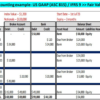
Amount billed (annual) @$5,000*12*80 (USD/INR) INR 48,00,000
Salary paid to the employee INR 33,00,000
Remaining used for real estate costs, office expenses, employee engagement expenses and to bear the cost of non-billed manpower etc.
Key reasons why enterprises set up GCC’s

Skills and roles in demand
According to various researches, data science, data analytics, data engineering, statistical analysis and UI/UX design are the most in-demand skills for GCCs’. 13% of the GCCs also rated communications, critical thinking and interpersonal skills as the most sought-after behaviour skills. The highest skill gap was found to be in the most desired skills like python programming, data analysis, and SQL/Hadoop specialists.
Skills that are most relevant to the model, like, business operations, strategic management, and sales engineering faced a skill gap of as high as 35%. While there is a cautionary outlook on hiring for GCC due to the current state of economic slowdown, specialized skills, domain knowledge and talent, especially mid-level talent with 5-10 years of experience will continue to be in demand.
Conclusion
The transformation of Global Capability Centres in India is marked by innovation, growth, and opportunities. Leveraging India’s talent pool, government support, and a focus on innovation, GCCs are evolving into strategic hubs for global companies. Challenges can be overcome through effective talent management, robust infrastructure, and a deep understanding of cultural nuances.Report this article