

The problem:
Organizations today remain largely at the mercy of paper-based systems, despite available technologies to reduce paper usage, if not remove it, altogether. As per one estimate, companies spend between 1 and 3% of their revenue on office printing and paper records account for 62% of data breaches in companies of over 500 employees. But greater problem in today’s terms is its impact on environment, which include –
- Water pollution = It requires 10 liter of water to produce one sheet of paper. Furthermore, the chemicals used to produce wood pulp and those used in the final bleaching processes, mostly chlorine dioxide, are also harmful to both the environment and human health
- Waste pollution = During the pulp and paper manufacturing process, organic solid residues are produced
- Deforestation = As wood is the main source of fiber to make paper pulp, producing paper requires the felling of large areas of forest. It is estimated that about 17 trees are needed to produce one ton of white paper.
- Air pollution = For every kilogram of paper produced, 3.3 kg of CO2 is released into the atmosphere.
What is “Paperless Office”
A paperless office is a workplace that has minimal paper-based processes and relies on digitized documents instead. Objective is not to be 100% free of paper, but reducing its use to bare minimum. It is also not about scanning the paper; rather its about fixing the problem at source and receiving all information/data in e format at first
Benefits
- Helping the environment = The office may generate less waste while also using fewer natural resources; helping with the problem
- Saving money = Storage costs: Typically, digital files don’t require any physical storage space
Printing costs: The cost of paper and ink may decrease since converting to digital means your employees use less of these resources
Operational costs: Paperless offices may have a more streamlined workflow because of having access to important company information
Security and data recovery costs: Securing data to multiple locations is easy and inexpensive. Recovering that data is even easier, with no impact on business continuity
- Increasing productivity = employees have digital access to files from anywhere, which provides more time for higher-priority tasks, such as communicating with a client.
- Protecting private information = You can choose to secure information using encryption, authentication or another type of data security practice based on your company’s needs
Challenges
Managing pushback and behavioral change in employees
Digitalization requires a central repository that facilitates storage and collaboration – typically an ECM system or service
VPN technology has been a common roadblock to centralization. Employees have often circumvented digitization because it requires logging on to a VPN to access centralized documents
It can be difficult to digitize existing paperwork, often due to the sheer volume of material that need to digitize
Project Map
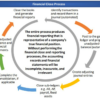
This is how I ran the paperless office project –
- Identify a process heavily dependent on papers
- Understand the process and key reasons for paper printing i.e. regulatory, preference based etc.
- Find out the solution for the soft reasons
- Map out the process to identify digitization opportunities
- Design the solution
- Create your leadership team and drive awareness + get the buy in of stakeholders
- Deploy your chosen content solution
- Document the process and measure its impact
Tools Available
- Use e-signature software – The leading solutions in this field include DocuSign, Adobe Sign, Right Signature, Juro
- Use digital apps – Utilizing apps and digital solutions will help you go paperless in the office. Whether it’s project management tools like Asana, communication tools like Slack or Teams, or note-taking tools like Evernote
- OCR instead of scanning
- Document management softwares such as M-Files review, Filehold Express, Revver, DocuWare
- Develop purchasing guidelines that encourage waste prevention. Concentrate on durable, reusable, recycled, and high-quality materials
- Set up central repositories for documents
- Use cloud storage corresponding with your email accounts
So, its your turn to be the champion of this change/cause